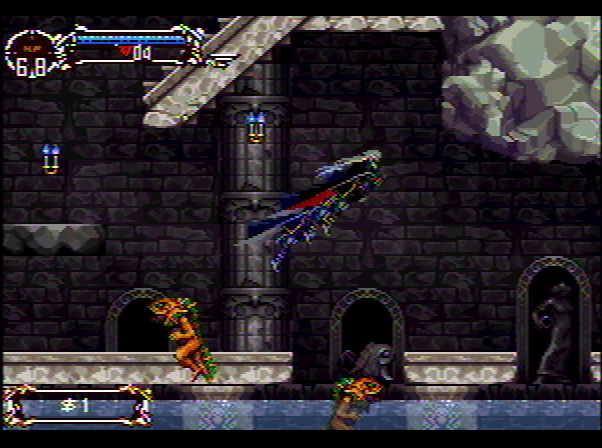
Kaffeeware has released a playable SNES demo of Castlevania: Symphony of the Night, with a shorter adaptation planned rather than a recreation of the entire game.
Symphony of the Night originally reached PlayStation in 1997. The SNES project takes Konami’s later adventure back to Nintendo’s earlier 16-bit console. A separate adaptation is also in development for Mega Drive.
The SNES project itself predates this demo. Time Extension reported its early development footage in February. The new download provides a playable build of work previously shown through video.
Kaffeeware has explicitly excluded the reverse castle. The latest reply confirms a shorter version is the goal.
The current archive carries version 0.1 and measures approximately 1MB. Kaffeeware invites bug reports and asks players to identify whether they used an emulator or hardware.
Development work still includes movement and the opening sequence. Kaffeeware acknowledges the jump needs attention and has discussed adding further details to the introduction. These remain planned changes.
Music also presents an adaptation task. The developer uses SNESMOD and has invited help from musicians familiar with the console’s sound hardware.
Kaffeeware intends to retain native SNES specifications while moving to a larger ROM. This remains a development aim, with no completion date announced.
The developer’s download page hosts the demo and ongoing discussion. It lists version 0.1 as the available build.