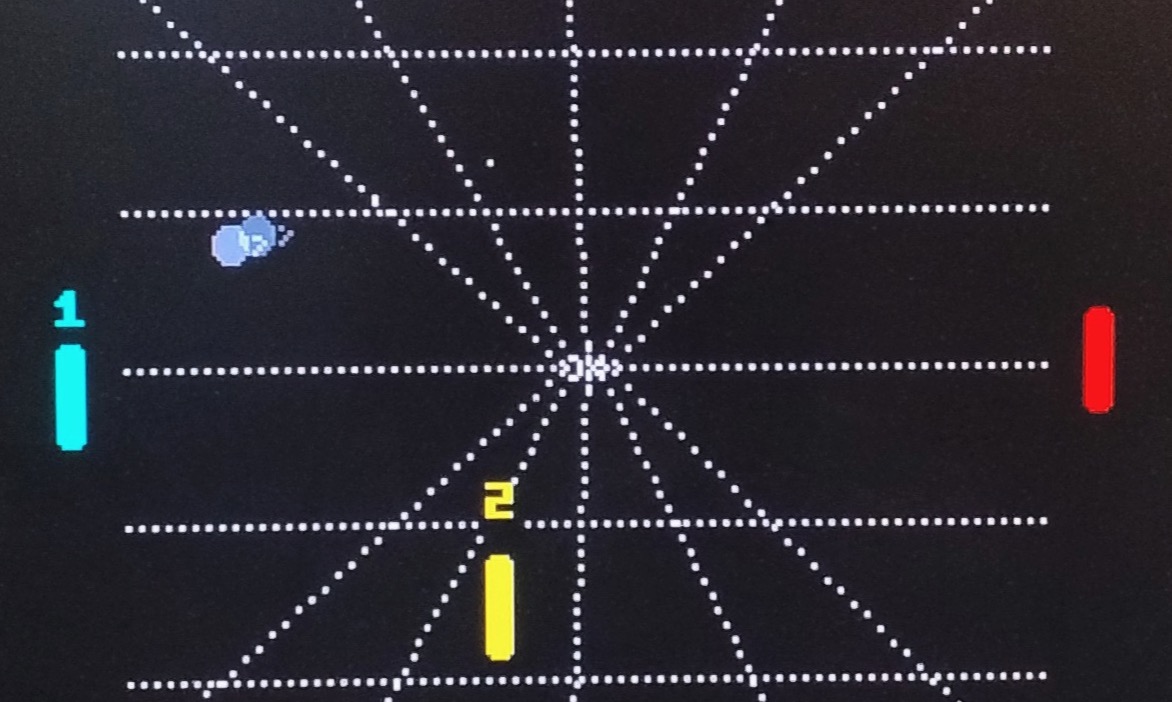
XPong48 gives two ZX Spectrum players a shared opponent. Codebiters’ paddle game includes a cooperative mode in which both players defend the same side of the arena, each with a separate paddle and a shared score.
The developer published the release on 25th October. It offers solo matches against the computer, local competitive play and the two-player cooperative mode. The download comes as a TAP file through itch.io.
Cooperative matches use the Classic arena and a faster computer opponent. One paddle sits nearer the back line and the other closer to the centre, dividing the defensive space between the two players.
Solo and versus matches introduce different arena rules. Gravity Well bends the ball’s path, Hyper Split reduces paddle size after impacts, and Multi-Ball Madness adds a second ball. Tied matches lead into an Overdrive round.
The presentation includes a cyberpunk backdrop, electrical arcs, energy waves and impact sparks. Codebiters also lists accelerating rallies, charged smashes and dash moves among the game’s features.
Twelve selectable music tracks use Yamaha sound hardware. They work on Spectrum 128 machines and 48K models fitted with a suitable expansion-port sound card. A separate no-music setting uses impact sounds, border tones and smash effects.
Codebiters describes XPong48 as optimised for PAL systems. Adjustable computer difficulty and round lengths accompany the three match formats.
XPong48 is available on a name-your-own-price basis from Codebiters’ itch.io page.