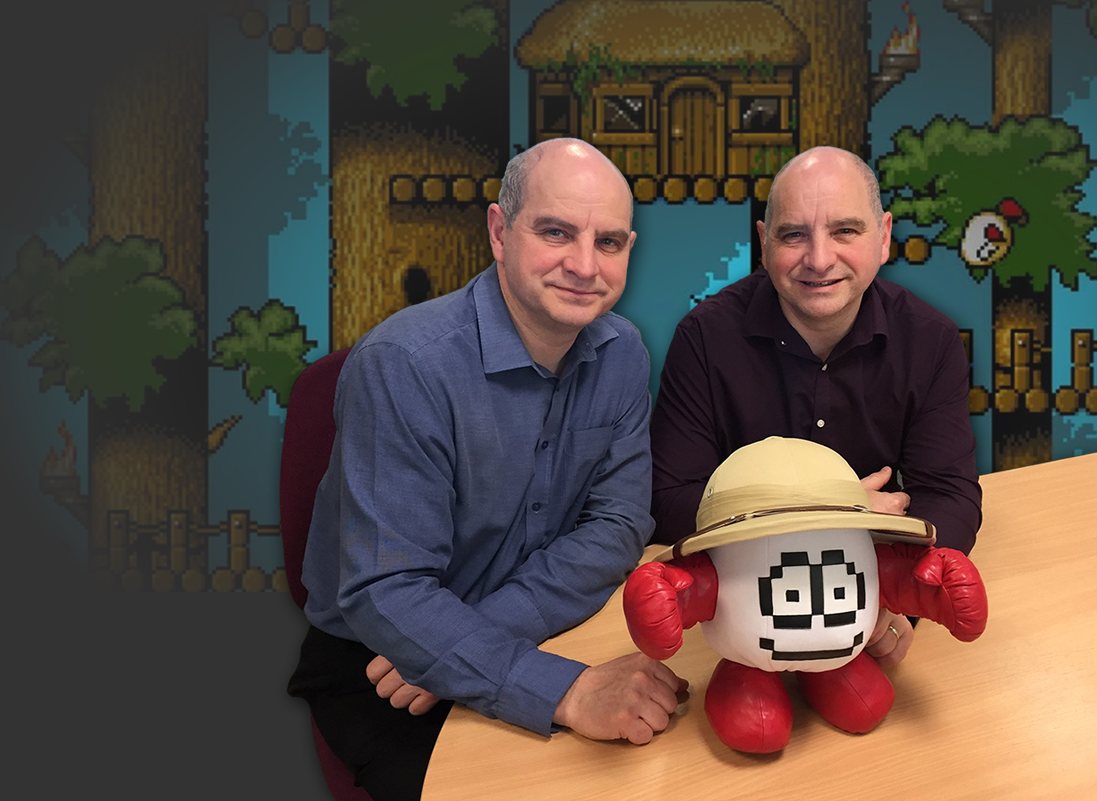
Philip Oliver remembers the creation of Dizzy without any great eureka moment. While working on Ghost Hunters, Philip became frustrated that hero Hunk Studbuckle’s head was effectively limited to around three by three pixels, leaving almost no room for expression. He opened Panda Sprites (an animation package they made while at school) and began doodling, making the entire character into an oversized face with just enough room left for red boots and boxing gloves.
“It was more of a playful experiment than a eureka moment,” Philip tells SpriteFountain. He added different expressions, idle animations and the rolling jump, then he and his twin brother Andrew Oliver recompiled Ghost Hunters with the new character in place. “He looked cute and the somersault immediately gave him personality, but an egg-shaped cartoon character running around a haunted mansion was obviously wrong for that particular game.”
The brothers spent perhaps half a day playing with him, decided the character was worth returning to, then put Hunk back and finished Ghost Hunters. He was not even Dizzy yet. The name arrived after Philip and Andrew’s father observed that all the rolling must make him dizzy, completing one of those origin stories that sounds almost suspiciously simple when you know what followed.
“We recognised that we had found an appealing character, but we certainly didn’t realise that we had created someone people would still care about nearly forty years later,” Philip says. “The character really emerged through the combination of his appearance, movement, fantasy world and puzzle-based gameplay.”
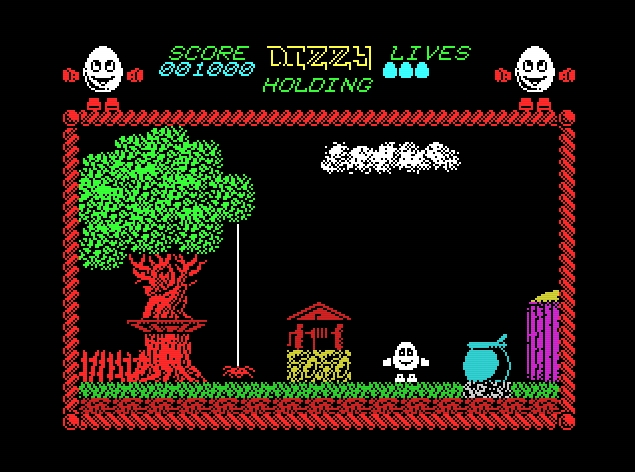
Dizzy began as an adventure nobody quite knew how to sell
Dizzy: The Ultimate Cartoon Adventure arrived in 1987, initially on ZX Spectrum and Amstrad CPC, combining platform movement with exploration and object puzzles. Instead of collecting an object because it was worth points, you carried it because somewhere else in the world there might be a problem that suddenly made it useful. That mixture gave Dizzy an identity separate from the growing collection of characters jumping around 8-bit screens.
The problem was explaining any of that on a cassette box. Philip remembers the game reviewing well but selling relatively slowly at first, partly because the name gave shoppers no useful clue. “A title such as Grand Prix Simulator told people exactly what they were buying; Dizzy did not.”
Then the normal sales curve refused to behave normally. Instead of an initial burst followed by a decline, Dizzy kept selling, while letters began arriving at Codemasters from people who were doing more than saying they enjoyed the game. They wanted puzzle help, sent pictures of Dizzy and, most importantly, asked when the character would return.
“Many were not simply saying that somebody had enjoyed the game; they were asking when Dizzy would return, requesting help with puzzles, drawing pictures of him or talking about him as a character,” Philip says. The Oliver Twins had already made successful games, but now people were asking for the protagonist himself.
“Eventually the volume of mail, combined with those steadily rising sales, made it obvious that people had formed an attachment to Dizzy himself,” Philip says. “By the time we developed Treasure Island Dizzy, there was a waiting audience.”
Philip and Andrew believed almost everybody who bought the first game picked up its sequel quickly, helping send Treasure Island Dizzy to number one over the Christmas period. The oversized face that had spent half a day trespassing in Ghost Hunters was now becoming the reason people bought the next game.
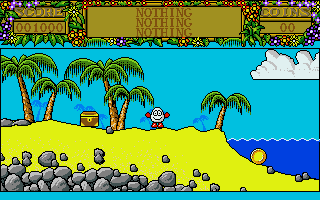
Treasure Island Dizzy expanded the world and accidentally removed all your spare lives
Treasure Island Dizzy arrived in 1988 and made the world feel more like a place to explore. Its island contained mines, water, buildings and routes that gradually became familiar as the player worked out how everything connected. The inventory also expanded into a scrolling system that allowed Dizzy to carry three objects, giving the Oliver Twins more freedom to create longer chains of puzzles.
It also gave Dizzy one life, a decision remembered by players with considerably less affection than the scenery. The reason was not a deliberate attempt to make the sequel brutally difficult. It was the result of a snorkel, a new inventory system and a Christmas mastering deadline arriving at the same time.
“The problem appeared only a few days before mastering,” Philip says. “Dizzy could carry three objects using the new scrolling inventory, but that meant the player might accidentally put the snorkel down while underwater. Dizzy would drown, lose a life and reappear underwater without it, then immediately drown again.”
The quick solution was to remove the extra lives altogether. With another week, Philip says they could have treated the snorkel as an equipped object while underwater, prevented it from being discarded there or automatically returned it following a death. “Any of those would have been better than making the entire game a one-life challenge.”
He would also have spent more time testing the hidden coins and situations where players could leave essential objects somewhere deeply inconvenient. “We were working extremely quickly, and nobody at Codemasters tested it because everyone assumed we had already done so,” Philip says. “They were not wrong, but a fresh pair of eyes would have helped enormously.”
Later releases and promotional variations started appearing around the increasingly familiar character too, including Dizzy: Special Edition and Treasure Island Dizzy: Crash Special Edition. Dizzy was beginning to occupy more than the numbered sequence of adventures, something that would become far more obvious over the next few years.
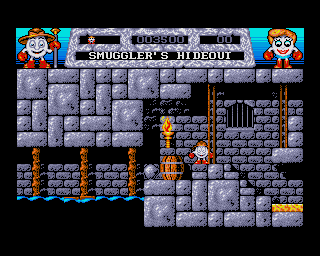
Fantasy World Dizzy found the formula and gave him a family
For Philip and Andrew, Fantasy World Dizzy in 1989 was where the elements came together properly for the first time. The goal was not simply to build another larger map. The three lives returned, the three-object inventory remained, conversations gained their own text-window system and far more characters appeared around Dizzy.
“The fairy-tale setting allowed us to combine familiar stories, such as Jack and the Beanstalk, with our own humour and puzzles,” Philip says. “There was more variety, a stronger sense of story and fewer opportunities for the player to make the game impossible by putting down the wrong object.”
The largest shift was that Dizzy now belonged somewhere. “Most importantly, Dizzy no longer felt like a solitary character exploring a collection of screens,” Philip says. “He belonged to a world populated by friends, family, villains and eccentrics.”
Those friends and relatives became the Yolkfolk. The term had already appeared in the instructions for Treasure Island Dizzy, but Fantasy World Dizzy turned it into a proper community with personalities recognisable after only a few lines of dialogue. Philip says this was deliberate because giving Dizzy relationships provided stronger reasons to explore and solve problems than simply dropping useful objects around a map.
Those personalities frequently began with television and film archetypes. Dylan took inspiration from Neil in The Young Ones, while Denzil owed something to the Fonz from Happy Days. Daisy mixed influences from Daphne in Scooby-Doo and Daisy from The Dukes of Hazzard, while Dozy was inspired by Sleepy from Snow White and the Seven Dwarfs.
Grand Dizzy drew something from Grandad in Only Fools and Horses, and Dora, Dizzy’s sister, was influenced by Velma from Scooby-Doo. “They began as broad cartoon archetypes because we had very little memory or dialogue space, but their personalities naturally became more rounded as later games gave them more to say and do,” Philip says.
The lack of space could even become an advantage. A character who could be understood immediately did not need an elaborate introduction. “You could often understand the joke or the problem before a lengthy explanation was necessary.”
Philip and Andrew still regard Fantasy World Dizzy as their most accomplished adventure on ZX Spectrum and Amstrad CPC. What continues to surprise Philip is the amount of game involved: “It still amazes us that everything fitted into approximately 34KB.”
Success also made Dizzy a business rather than simply another Oliver Twins game
The rapid growth of Dizzy also exposed how informal parts of the British games business had been when the character was created. The Oliver Twins’ early relationship with Codemasters developed in a world where young programmers could move quickly from one project to the next without the contractual machinery that would later surround valuable game characters. Once Dizzy became a recognisable brand, questions about logos, ownership and control became much harder to ignore.
Philip and Andrew have previously described reaching the Fantasy World Dizzy period without the sort of detailed agreement that success now made necessary. Codemasters asserted rights around the character and branding, while the brothers had created and developed Dizzy through the earlier games. A later agreement formalised their relationship and established joint interests around the property.
By then Dizzy was supporting sequels, conversions, spin-offs, compilations and growing console ambitions. The rights and licensing picture would continue to change in later decades, which makes the history better treated as an evolving commercial relationship than a single ownership statement covering the entire life of the character.
Dizzy escaped from adventure games altogether
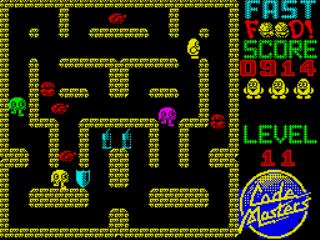
The other sign of success was that Dizzy no longer needed an adventure to justify his name on the box. Fast Food Dizzy arrived in 1989 from a maze-game experiment that had not originally been conceived for the character. Philip and Andrew had been playing with a fast arcade design influenced partly by their affection for Pac-Man and the Apple II clone Taxman; after a proposed promotional connection with the Happy Eater restaurant chain failed to happen, Dizzy eventually became the star.
Kwik Snax followed in 1990 with another maze and puzzle variation. Dizzy Panic moved into shape-matching puzzle territory, while Bubble Dizzy put the character at the bottom of the sea and asked him to escape by bouncing upwards across bubbles. Dizzy Down the Rapids sent him downstream in a barrel instead, which at least saved him the trouble of pretending he was walking anywhere.
The console branch stretched these experiments further. Go! Dizzy Go! reworked ideas associated with Kwik Snax into a maze game with simultaneous two-player play, while Panic! Dizzy became a substantially redesigned collection of puzzle games rather than a simple cartridge copy of the earlier computer release. Four Suits, Match More, Dizzy Dice, Puzzle Path and Picture Perfect showed how loosely the character could now be attached to a particular mechanical identity.
During the busiest years, Dizzy could be wandering through a fairy-tale kingdom, escaping underwater, tumbling down a river, chasing food through mazes or appearing in compilations that mixed several of those ideas together. He had become a mascot, but one born from Britain’s cassette-era development culture rather than a console company’s marketing department.
Big Red Software proved somebody else could understand what made Dizzy work
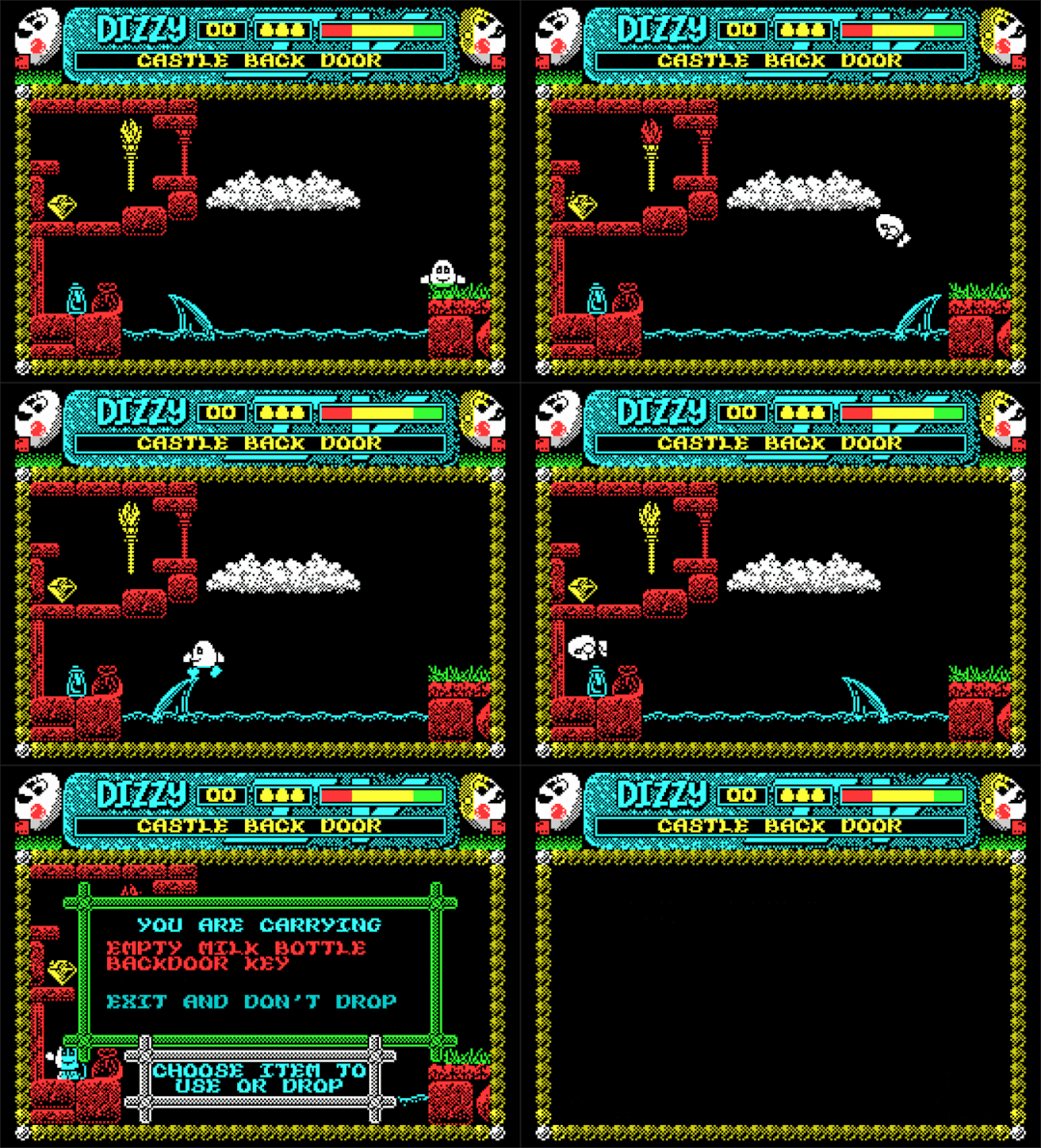
As the series expanded, Philip and Andrew could no longer personally build every adventure. Their attention was moving towards a far more ambitious NES project, but the home-computer audience still wanted another Dizzy game. Big Red Software was already working with Codemasters, and Magicland Dizzy became the test of whether another studio could inherit the character without reducing him to a familiar sprite placed over somebody else’s platform game.
Philip and Andrew supplied rough ideas and worked with Neal Vincent and the Big Red Software team to develop the story and design. “What impressed us was that they understood Dizzy was not simply a platform character,” Philip says. “The pleasure came from exploring, meeting characters, recognising fairy-tale ideas and solving chains of logical, humorous problems.”
That understanding extended to the audience. “They also understood that the games were child-friendly without needing to be simplistic or patronising.” Big Red Software constructed maps, situations and small story arcs while Philip and Andrew reviewed designs and suggested changes, and the resulting Magicland Dizzy convinced the brothers that another team could extend the series without losing its tone.
“Magicland Dizzy felt like a natural continuation of what we had established, rather than somebody merely imitating the graphics,” Philip says. A smaller connecting release, Dizzy 3 and a Half: Into Magicland, also linked the events of Fantasy World Dizzy and Magicland Dizzy, another sign that the character’s world was becoming large enough for even the gaps between major adventures to be filled.
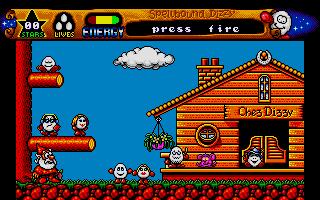
Big Red Software took still greater ownership with Spellbound Dizzy, creating the concept and map while Philip and Andrew reviewed the material, approved most of it and added suggestions. The scale and ambition came from Big Red Software. “By then they had proved that they understood both the mechanics and the tone of Dizzy’s world.”
The clearest example of that understanding came with Dizzy: Prince of the Yolkfolk. Philip still remembers wishing the Oliver Twins had invented one particular puzzle themselves: a lion suffering from a thorn in its paw. Dizzy removes the thorn, helps the lion and turns a familiar story into a simple object puzzle based on kindness rather than machinery or trickery.
“The lion puzzle was a wonderfully simple use of a familiar story: remove the thorn, help the lion and form a relationship through an object and a small act of kindness,” Philip says. “It was immediately understandable, perfectly suited to Dizzy and memorable without being complicated.”
“I remember thinking that we should have come up with it ourselves.” Philip remains happy to give Big Red Software the credit. “They did not merely reproduce our formula; they showed that they understood its essence and could contribute ideas of their own.”
Fantastic Dizzy turned 256KB into permission to keep adding things
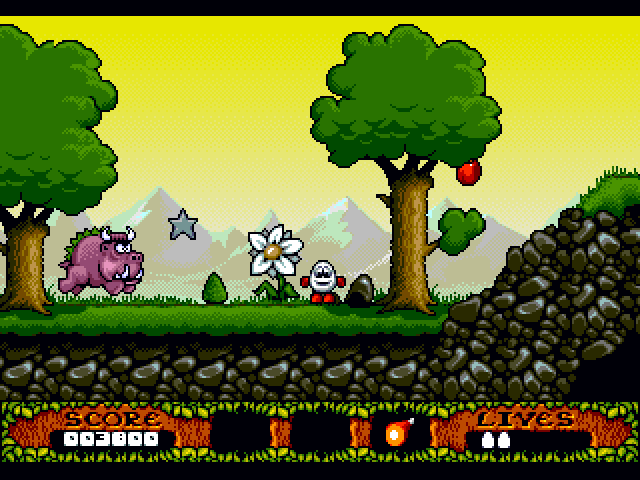
The shift towards Nintendo changed the scale of what Philip and Andrew thought a Dizzy game could contain. Where their Spectrum adventures had lived in roughly 34KB, The Fantastic Adventures of Dizzy, later known more simply as Fantastic Dizzy in Europe, could use a 256KB NES cartridge. To developers accustomed to watching individual bytes, it initially appeared enormous.
“It encouraged us to become vastly more ambitious,” Philip says. “For a short while it felt as though we could include anything. Of course, once we began designing, we quickly found ways to use it all.”
Rather than stretch a conventional Dizzy adventure across more screens, the team attempted what Philip calls the definitive Dizzy game. Ideas from the first three adventures were combined with a much larger world, more animation and presentation, plus arcade sequences including the mine-cart ride, rapids and Bubble Dizzy. Peter Williamson joined them to develop those additional games.
The extra capacity also prompted a rethink of accessibility. Philip showed an early version to his future wife Ali and realised that somebody unfamiliar with adventure games might not understand the basic assumption that an object picked up in one place could solve an unrelated-looking problem somewhere else. Time-delayed hints were added for players who appeared to be stuck.
“The cartridge made individual technical problems easier, but it raised our expectations enormously,” Philip says. “Empty memory feels less like spare capacity to a game designer and more like an invitation to add another feature.”
Development took around seven months, far longer than the earlier adventures. The NES offered smooth hardware scrolling, sprites and cartridge storage, but Philip says it was designed around a more action-oriented console audience. “We could not simply make the Spectrum game prettier.”
Pacing, accessibility, presentation and the balance between puzzles and arcade action all shifted. The console branch also produced related but distinct games such as Dizzy the Adventurer, which reworked Prince of the Yolkfolk for console hardware, while Go! Dizzy Go! and Panic! Dizzy further complicated any attempt to draw one simple line through the series.
The Commodore 64 showed how much could survive a conversion
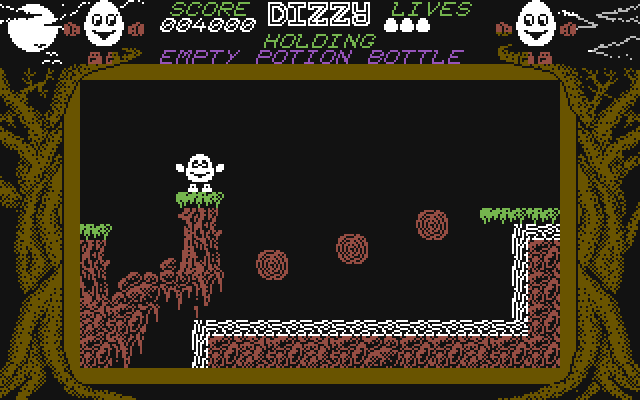
Dizzy travelled between machines constantly, and not every conversion needed the sort of reinvention demanded by NES. Asked which version surprised him most, Philip points to the Commodore 64 conversion of the original Dizzy. He and Andrew never developed on the machine themselves, yet the conversion preserved enough of the character and structure to feel recognisable despite different graphics and sound hardware.
The conversion was handled through Codemasters by Ian Grey, who went on to work on further Dizzy conversions for the machine. “He did an excellent job of preserving the character, puzzles and atmosphere despite the machine having very different graphics and sound hardware,” Philip says.
The process also says plenty about how game development worked at the time. “One of the strange things about the industry then was that we frequently never met the people converting our games,” Philip says. “Code and artwork would disappear through the publisher and a completed version would eventually return.”
For Philip, seeing another programmer who had not sat beside the original developers identify what needed to survive was deeply satisfying. Across its busiest years the Dizzy catalogue spread through ZX Spectrum, Amstrad CPC, Commodore 64, Atari ST, Amiga, DOS and several consoles, sometimes through close conversions and sometimes through versions redesigned around completely different expectations.
Crystal Kingdom Dizzy arrived as the world that created Dizzy was changing
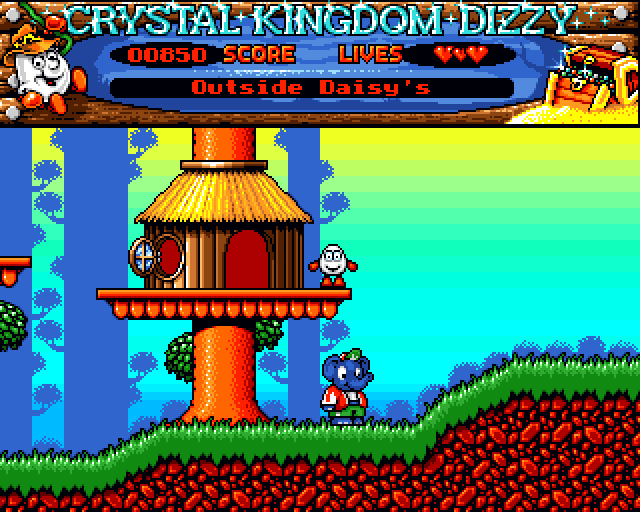
Crystal Kingdom Dizzy arrived in 1992 as the seventh and final main adventure of the original home-computer sequence. Paul Ranson led production, while Dave Thompson took lead programming and design duties. Dizzy set off to recover stolen crystal treasures, but the surrounding market was changing as quickly as the series itself.
Codemasters released it at full price rather than following the budget positioning closely associated with much of Dizzy’s rise. The 8-bit versions cost £9.99 while Atari ST and Amiga versions were £19.99, placing the game in a different commercial environment as the British 8-bit market was losing momentum.
The machines that had supported budget cassette software were ageing, console development was becoming strategically important, Philip and Andrew were working on increasingly large projects and Codemasters itself was changing. Dizzy had been created in an environment where two young programmers could move rapidly from one home-computer game to another; by the early 1990s, the commercial centre of the industry was shifting elsewhere.
By then the catalogue was already being repackaged and redistributed extensively. Dizzy Collection gathered releases together, while Dizzy’s Excellent Adventures mixed adventure and arcade titles. Other promotional releases and compilations extended the character’s life on machines where plenty of players encountered several Dizzy games at once rather than following the chronology one cassette at a time.
Console collections continued the pattern. The Big 6 brought six games to Amiga CD32, while The Excellent Dizzy Collection combined Dizzy the Adventurer, Go! Dizzy Go! and Panic! Dizzy on Sega hardware. The console branch was never as tidy as the familiar numbered computer adventures suggest.
Some Dizzy games disappeared before anybody could buy them
The move towards consoles left behind a stranger legacy than cancelled ports. Complete or near-complete games could disappear when commercial plans changed, leaving source disks, maps and memories as the only evidence they had existed. Decades later, some of those projects began returning.
Wonderland Dizzy is the clearest example. At Play Blackpool in 2015, Philip and Andrew showed the hand-drawn map during a talk and found themselves wondering on stage whether the NES game had actually been released. They established that it had not, and Philip went searching through his loft hoping a master cartridge or ROM might have survived.
Instead, he found the source code.
Lukasz Kur was able to recompile it, tidy the game and create a working master. “Suddenly a game we had last seen more than two decades earlier was alive again,” Philip says. “It was rather like opening a time capsule made by your younger self, except that people could actually play it.”
The game itself was based on Magicland Dizzy but allowed players to control Dizzy, Daisy or both. If one character died, the Cheshire Cat transferred the inventory to the survivor, forcing the adventure to be designed carefully enough that the change could not permanently break its puzzle logic.
A physical NES release eventually followed through the Let’s Go Dizzy book Kickstarter, with proceeds going to SpecialEffect. “Something we had assumed was lost had finally acquired an audience and also helped a very worthwhile charity,” Philip says.
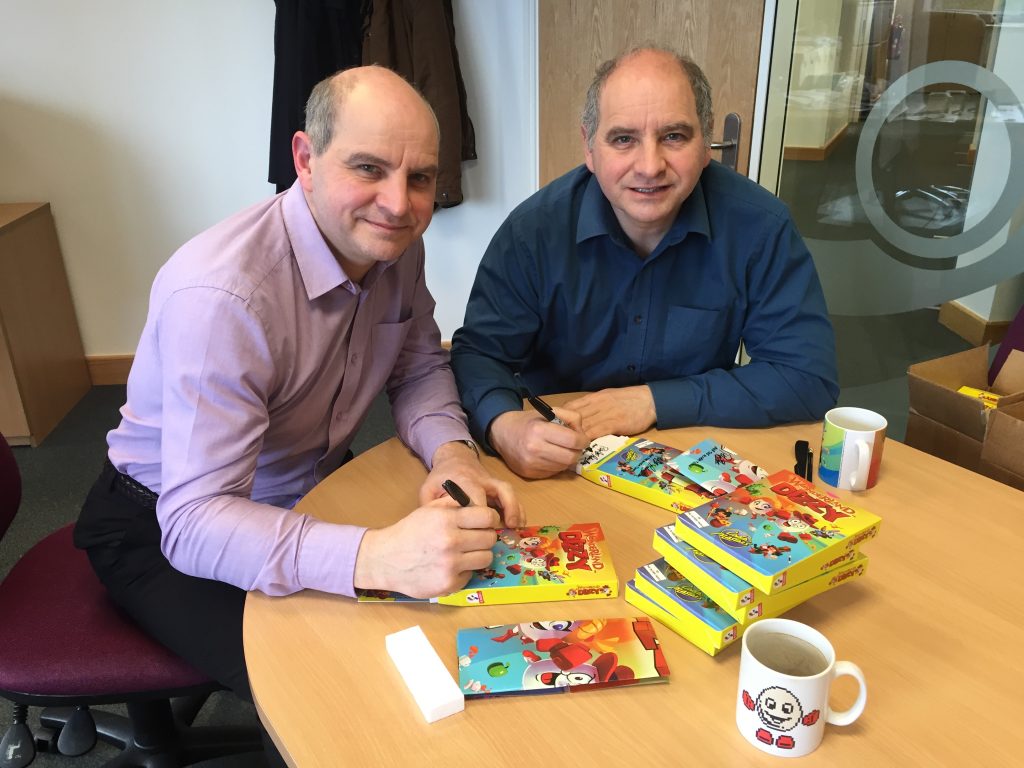
Other lost projects emerged from the archives. Mystery World Dizzy, another unreleased NES title, eventually became playable, while Dreamworld Pogie placed the Yolkfolk’s creature companion in the starring role. The redesigned NES Panic! Dizzy also escaped its original cancellation decades later.
Even these recovered games do not necessarily represent everything that was attempted. Archival material has also revealed abandoned ideas such as Learn With Dizzy, evidence that some projects never progressed into the familiar official catalogue. Philip’s view of keeping old disks is understandable: the recoveries made the brothers glad they preserved so much, “even if our filing had been rather chaotic.”
The fans kept making Dizzy when the commercial series stopped
The years between the original commercial run and the later official revivals were not empty. Fans kept drawing maps, documenting releases, building websites, recovering obscure material and, eventually, making their own adventures.
The long-running Yolkfolk.com became one of the central repositories for that history, preserving information on the official games while also giving fan projects somewhere to live. Its archive now reaches far beyond the releases somebody could once buy in a British computer shop, covering fan-made adventures, remakes, tools and material rescued from the less organised corners of Dizzy’s past.
DizzyAGE, the Dizzy Adventure Game Engine launched in 2006, gave that community a dedicated way to build games around the basic grammar of Dizzy. By March 2026, Yolkfolk reported 171 fan games created with the engine by more than 30 authors. That represents two decades of people still designing maps, object chains, characters and puzzles around a formula that had largely disappeared from commercial release schedules.
Those fan developers had to understand many of the same principles Philip identifies when talking about Big Red Software. A convincing Dizzy adventure is not created by drawing an egg, putting platforms around him and scattering keys across the map. The locations need to become memorable, the object puzzles need to form understandable chains, characters need a reason to occupy the world and the humour has to fit around all of it.
The fan scene also preserved the idea that Dizzy was something people could still make, not merely something to emulate. Competitions, remakes and new adventures kept the design language active while commercial releases were scarce, and the same community spirit later fed into preservation work and new projects.
Dizzy never entirely went away. The official production line stopped, but the players carried on mapping, coding, redrawing and arguing about inventory puzzles until the official history caught up with them again.
Dizzy Returns tried to modernise him on a much larger scale
An enhanced version of Dizzy: Prince of the Yolkfolk reached modern devices in 2011, but the larger attempt to bring the character back came the following year. Dizzy Returns was conceived as a modern game for mobile devices and PC, with richer 3D artwork and technology demanding a production budget far removed from the home-computer days.
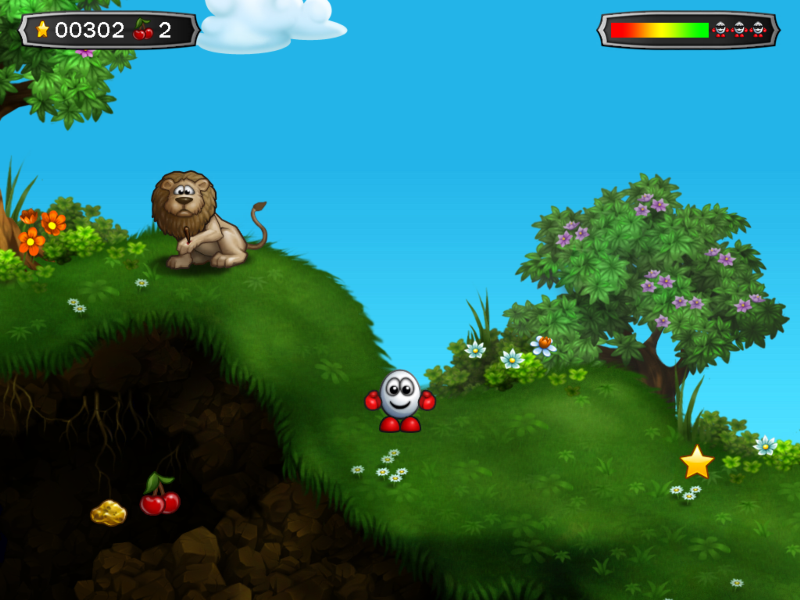
The 2012 Kickstarter sought £350,000 and failed to reach the target. Philip does not interpret the result as evidence that players had stopped caring about Dizzy. “The campaign showed that there was still enormous affection for Dizzy, but not necessarily enough people prepared to fund that particular scale and interpretation in advance.”
“We do not regard that as proof that Dizzy can never work as a modern game,” Philip says. “It was more a mismatch between the budget, platform, timing and what the core audience expected.”
The project had tried to make Dizzy fit contemporary production expectations on a scale large enough to require substantial funding. The next major Oliver Twins-designed adventure went in almost the opposite direction.
Wonderful Dizzy came back to the Spectrum instead
Wonderful Dizzy began as a stretch goal connected with the ZX Spectrum Next Kickstarter. Philip and Andrew designed a new adventure, while what Philip calls an exceptionally talented fan team developed it as a 128K ZX Spectrum game.
The contrast with Dizzy Returns was considerable. Instead of constructing a visually modern 3D interpretation, Wonderful Dizzy returned to a large hand-designed map, object puzzles, conversations, fairy-tale ideas and the familiar movement of the classic adventures. Its story drew on The Wonderful Wizard of Oz, sending Dizzy and Pogie into Oz before the Wicked Witch of the West takes Pogie and sets another chain of problems in motion.
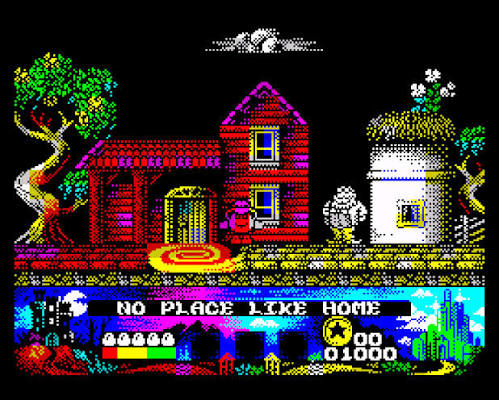
A dedicated ZX Spectrum Next-specific version did not ultimately appear, but the released 128K game became the first completely new Dizzy adventure designed by Philip and Andrew in 28 years. It also demonstrated how much of the original structure still worked when the people involved understood which parts were fundamental.
“People did not need Dizzy to be reinvented beyond recognition,” Philip says. “What they wanted most was an excellent new Dizzy adventure.”
Philip does not think that conclusion ties Dizzy permanently to one old computer. “The larger lesson was about authenticity rather than hardware,” he says. “A new Dizzy can live on another platform, provided it retains the character and values that made the originals special.”
The complete Dizzy catalogue is much messier than seven adventures
If you only count the familiar main adventure sequence, Dizzy history looks relatively simple. Start with Dizzy: The Ultimate Cartoon Adventure, move through Treasure Island Dizzy, Fantasy World Dizzy, Magicland Dizzy, Spellbound Dizzy, Dizzy: Prince of the Yolkfolk and Crystal Kingdom Dizzy, with Fantastic Dizzy representing the much larger console-era interpretation. That sequence explains the adventures, but not the character’s actual commercial life.
The arcade and puzzle side adds Fast Food Dizzy, Kwik Snax, Dizzy Panic, Bubble Dizzy, Dizzy Down the Rapids, Go! Dizzy Go! and the redesigned Panic! Dizzy. The console branch also includes Dizzy the Adventurer, while smaller releases and variations bring in Dizzy: Special Edition, Treasure Island Dizzy: Crash Special Edition, Dizzy 3 and a Half: Into Magicland, Easter Eggstravaganza and the Amiga Power Christmas Dizzy demo.
Then there are the compilations, including Dizzy Collection, Dizzy’s Excellent Adventures, The Big 6 and The Excellent Dizzy Collection. The later history adds the enhanced Prince of the Yolkfolk, Wonderland Dizzy, Mystery World Dizzy, Dreamworld Pogie, later reinterpretations such as the Fuze-powered Fast Food Dizzy and finally Wonderful Dizzy.
The official archive at Yolkfolk.com counts 31 entries across this sprawling history. Some are full adventures, some are spin-offs, some are compilations, some are alternate editions and one places Pogie rather than Dizzy at centre stage. The number is useful less as a statistic than as evidence of how badly a simple numbered sequence describes what Dizzy became.
Different players can therefore remember completely different versions of the same character. One person met Dizzy on a Spectrum through object puzzles and static screens. Another found him on Commodore 64, Amiga or Atari ST, while somebody else encountered Fantastic Dizzy on NES or found an arcade spin-off in a compilation before ever seeing one of the original adventures.
Another generation found the fan games, the recovered NES projects or Wonderful Dizzy. The ZX Spectrum remains the obvious starting point for the history because so much of the character’s original design language formed there, but the full story quickly spreads far beyond one machine.
Why Dizzy lasted when so many other computer mascots disappeared
The easiest explanation is nostalgia, but nostalgia does not produce 171 fan games by itself. Plenty of successful 8-bit characters disappeared when the market around them disappeared. Dizzy offered players something unusually easy to carry from one machine or decade to another: a recognisable character attached to a recognisable way of thinking.
The maps were part of it. Static screens gave individual locations an identity, and repeated wandering gradually converted a disconnected collection of places into a mental map. Players remembered the treehouse, castle, mine or strange character blocking a route because they had passed through the same place several times while trying to understand what the game expected.
The objects were equally important. A bottle, rope, key, bone or apparently ridiculous piece of scenery could sit in the inventory long before its purpose became obvious. The satisfaction came from remembering a problem elsewhere and suddenly connecting it with something already found.
Sometimes the puzzles were less generous. Sometimes an object was left on the wrong side of the map, a jump was misjudged or Treasure Island Dizzy reminded you that somebody had once fixed an underwater respawn problem by deleting all but one of your lives. Philip is clear that those frustrations should not be mistaken for the essence of the design.
The character helped enormously too. Dizzy’s huge face and small limbs had begun as a response to graphical limitations, but those proportions also made him readable on tiny 8-bit displays. The somersault gave every jump personality, while the Yolkfolk turned a protagonist into a community players could recognise without elaborate introductions.
Most importantly, Dizzy was rarely about defeating a world through force. The character survived because he was small enough to need help and observant enough to provide it in return. Even his strangest inventory puzzles tend to ask what somebody needs rather than which weapon will remove them.
What another Dizzy game should keep, and what can stay in the 1980s
Ask Philip what he and Andrew would preserve if they designed another adventure today with no commercial pressure and no obligation to modernise it, and the answer is strikingly close to the fundamentals established almost four decades ago.
“We would keep the essentials almost completely unchanged: the side-on exploration, the clearly defined screens and locations, the single-button accessibility, Dizzy’s somersault, the object-based puzzles, the fairy-tale world, the Yolkfolk and the gentle humour,” Philip says.
He would preserve a map that gradually becomes familiar, where something collected much earlier suddenly becomes useful and solving one problem opens another part of the story. Dizzy himself would remain courageous precisely because he is small and vulnerable rather than because somebody has equipped him with an arsenal.
“He is not a superhero with weapons and upgrades,” Philip says. “He succeeds by helping people, observing the world and working things out.”
There are parts of the original experience he would leave behind without ceremony. “We would not bring back one life, blind jumps onto fatal hazards, objects that can make the game permanently impossible, or the requirement to replay several hours because of one mistake.”
Those annoyances may feel inseparable from memories of some 8-bit adventures, but Philip says they were frequently consequences of limited memory, minimal testing and hard deadlines rather than treasured pieces of the formula. The goal would still be challenge, but without asking players to accept punishment simply because old games once had little choice.
“We would want the player to feel challenged, but also respected,” Philip says. “Ideally, somebody should be able to finish the game without consulting the Internet, while still experiencing several satisfying moments when the answer suddenly clicks.”
“That, to us, is the heart of Dizzy.”
Nearly forty years after an oversized face briefly wandered into the wrong game, Dizzy’s history still refuses to end neatly. The computers changed, other developers took over, cartridges vanished into archives, fans built hundreds of their own adventures and one unfortunate snorkel condemned an entire generation to tackling Treasure Island Dizzy with a single life.
Underneath all of it remained the same appealing idea: a small cartoon character wandering through a world of people and problems, carrying something peculiar in his pocket and hoping that sooner or later he would work out why he picked it up.
Explore the series through the Oliver Twins’ Dizzy archive and the long-running fan archive at Yolkfolk.com.