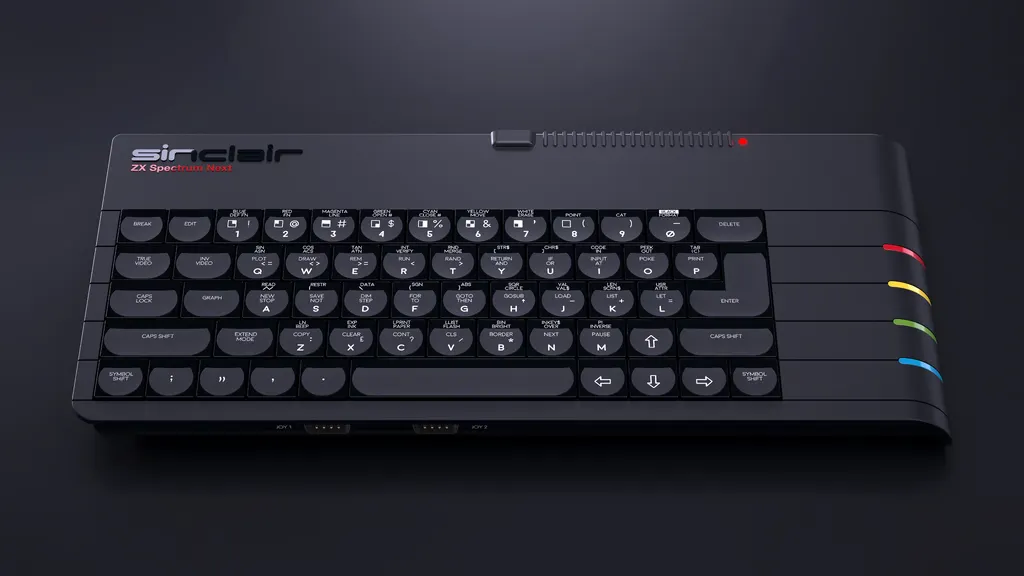
When I first unboxed my ZX Spectrum Next Issue 2, or KS2 as most of us still call it, it felt a little like opening a time capsule. Except this was no relic. There was no yellowed keyboard rescued from an attic, no temperamental machine bought from a car boot sale and crossed fingers when the power went on. This was a brand-new Spectrum.
That still feels slightly ridiculous in the best possible way. The ZX Spectrum Next takes something inseparable from the early 1980s and somehow makes it feel active again. Not preserved, not recreated for display, but alive.
Owning the KS2 has been a joy because every time I switch it on there is a little of that old Speccy excitement, only without pretending nothing has changed in more than forty years. The Next keeps the personality and quirks that made the Spectrum interesting, then gives developers room to do things that would once have looked absurd.
That is the clever bit. It does not feel like somebody rebuilt an old computer because nostalgia sells. It feels like somebody asked what the Spectrum might have become if people had simply refused to stop developing it.
One Spectrum, rather more than one computer
The FPGA at the heart of the Next is a huge part of the appeal. Alternative cores can make the hardware behave like other machines, turning the computer on your desk into a route into parts of computing history that once sat on opposite sides of playground arguments.
Issue 3 pushes that idea much further. Its larger FPGA gives the project considerably more room for alternative cores, moving the Next beyond the idea of being simply an upgraded Spectrum and further towards becoming a wider retro-computing platform.
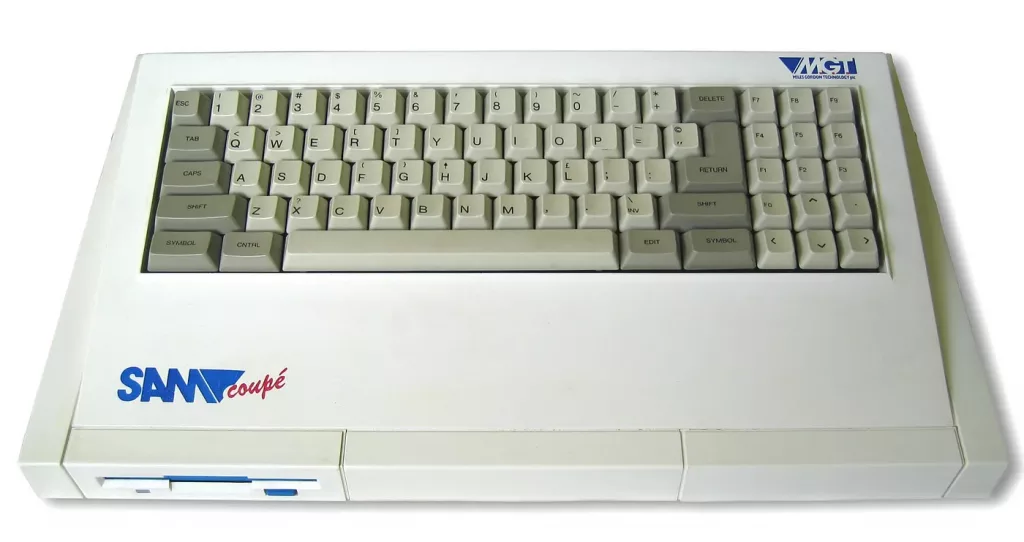
The SAM Coupé is perhaps the most fitting example. Often remembered as the machine that might have carried the Spectrum idea forward at the end of the 1980s, the SAM never found the audience its ambitions deserved. Seeing it represented on the Next feels like an oddly satisfying bit of computing history folding back on itself.
Then there is the Commodore 64. Spectrum versus C64 was once serious playground business, despite how absurd that sentence sounds now. The idea of switching between the two on the same modern machine feels wonderfully wrong. Decades of arguments reduced to a menu option.
The Amstrad CPC belongs in that conversation too. Spectrum, Commodore and Amstrad defined a huge part of British 8-bit gaming between them, and being able to explore those different approaches from one FPGA machine makes the Next more interesting than a souped-up Speccy alone.
That does not mean every machine anyone has ever loved is suddenly guaranteed to appear. Atari ST and Amiga support remain the sort of possibilities it is fun to imagine rather than features I would buy a Next expecting. I grew up with an Atari ST and later an Atari Falcon, so of course the thought appeals to me, but speculation is not the same thing as a feature list.
The old games are only half the point
Retro gaming has never meant pretending games stopped improving sometime around 1992. Modern games can be extraordinary. What keeps pulling me back to older machines is something else: immediacy, constraints and the ingenious things developers did when there was almost no hardware to waste.
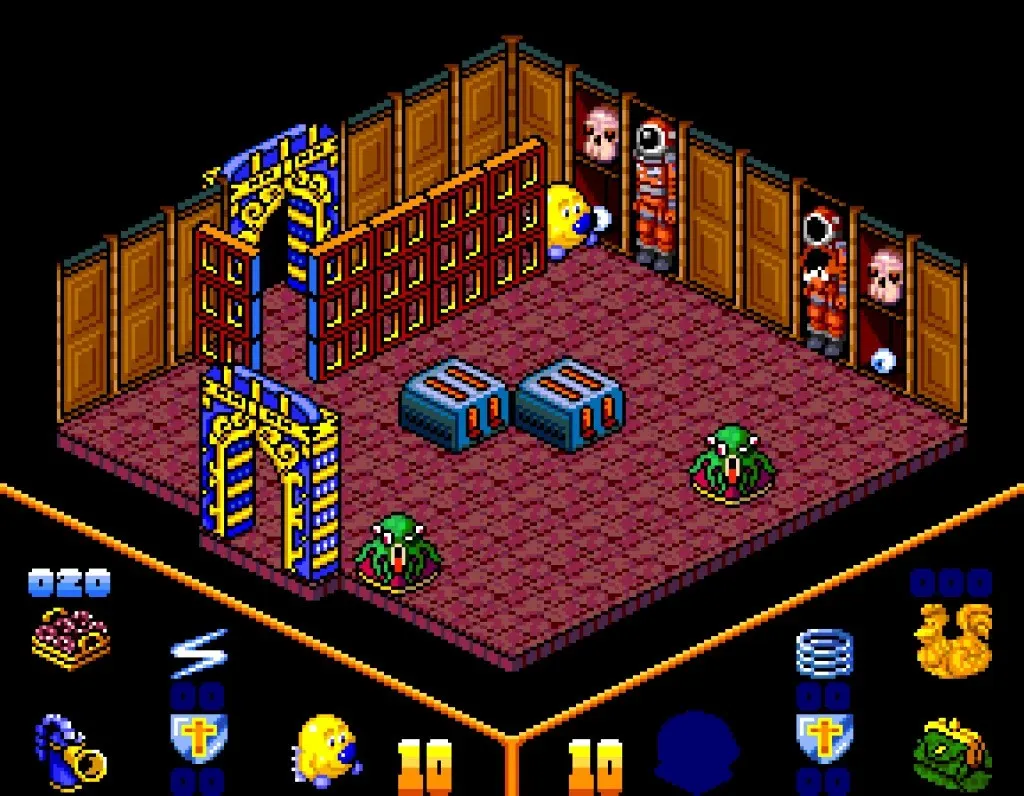
Head over Heels remains a perfect example. It is an 8-bit game with an ambition that still feels enormous, full of interconnected rooms, characters and ideas that made the Spectrum seem capable of far more than its specifications suggested. Playing it on the Next is nostalgic, obviously, but it is also a reminder that clever design tends to age rather better than technology.
The more interesting part of the Next, though, is that I do not have to stop with the classics.
Games such as O, Black & White, Knight Knight and Captain Square Jaw are a huge part of why the machine feels genuinely alive. They are not historical curiosities being rediscovered. They exist because developers still look at Spectrum-style hardware and see things worth making.
That changes the relationship with the machine completely. A real 1980s Spectrum inevitably carries its history with it. The Next has that history too, but it also has anticipation. There are still new games to play, demos to watch and programmers finding increasingly unreasonable things to make the hardware do.
Some Next software can look astonishingly removed from what most of us once thought a Spectrum could manage. That does not magically turn it into an Amiga or Atari ST, nor does it need to. It shows what happens when decades of accumulated knowledge meet an architecture whose limits were once treated as fixed.
The community is the machine
The thing I love most about the ZX Spectrum Next is not really the specification sheet. It is why the machine exists at all.
This is hardware born from people caring far too much about a computer from 1982. I mean that entirely as a compliment. Engineers, developers, artists and players decided the Spectrum still had somewhere to go and then did the difficult bit of actually building it.
That care is visible in the finished KS2. It does not feel like a novelty computer designed to be photographed beside an old cassette case. It feels polished and deliberate while still leaving room for firmware, new software and community projects to keep changing what it can do.
That is also what connects it most strongly to the original Spectrum. Sinclair’s machine put a programmable computer into an extraordinary number of ordinary homes. The interesting question was never simply how powerful it was. It was what somebody might decide to make with it.
The Next understands that.
A future built from an old idea
Issue 3 makes the future of the project even more intriguing. A larger FPGA and more space for alternative cores move the Next further towards being a platform for retro computing rather than one upgraded Spectrum with a particularly ambitious feature list.
I still enjoy imagining where that might eventually lead. An Atari ST core would make me grin. An Amiga core would probably consume an irresponsible amount of my time. Neither is something I need in order to justify the machine, though.
The fun is that the Next encourages that kind of thinking in the first place.
My KS2 already does what I wanted it to do. It plays the Spectrum games I grew up with, gives me new Spectrum games to play and lets developers explore ideas that would have seemed ridiculous when the original rubber-key machine appeared.
Anything beyond that is a bonus.
More than nostalgia
The ZX Spectrum Next works because it does not ask the Spectrum to remain frozen in 1982.
It respects where the machine came from, right down to the strange pull of loading an old favourite, but it also accepts that preservation becomes far more interesting when people are still creating.
That is why the Next belongs so naturally on SpriteFountain. Retro gaming never actually stopped. Old machines keep acquiring new software, new hardware, new communities and occasionally entirely new versions of themselves.
The Speccy is one of the best examples.
More than forty years after the original ZX Spectrum appeared, people are still programming for it, rebuilding it, arguing about it and asking what it might do next.
I cannot think of a better legacy than that.
Long live the Speccy. Long live the Next.