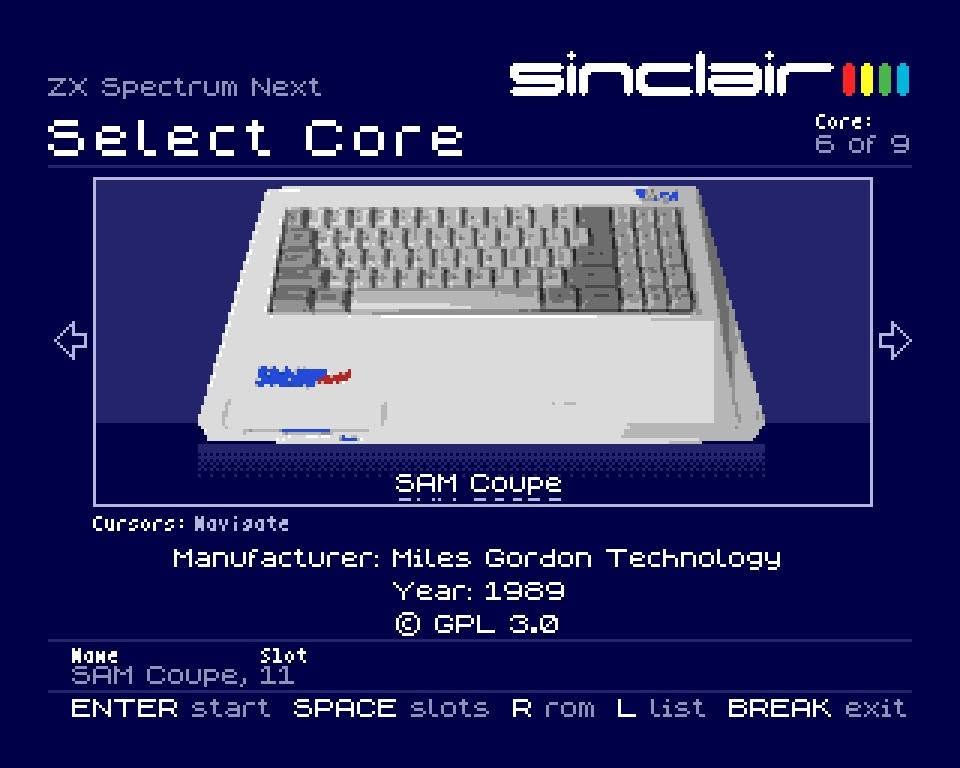
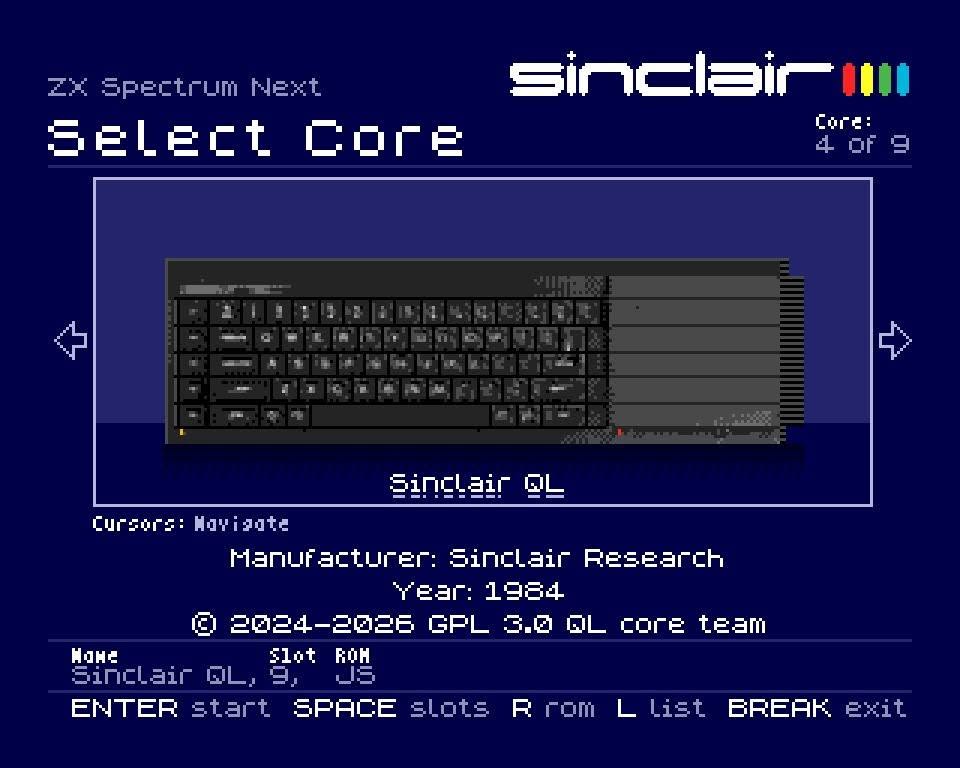
Phoebus Dokos has teased the SAM Coupé core for ZX Spectrum Next, alongside an updated QL core and a redesigned firmware core selector. The developments arrive as Issue 3 backers await the final stages of delivery.
Miles Gordon Technology launched the SAM Coupé in 1989. The core formed an Issue 3 Kickstarter stretch goal, and the latest details cover processor speeds, display connections, disk access and integration with the Next’s hardware.
The SAM core offers a Z80N running at clock settings up to 48MHz on KS3 and KS2 machines. Wait states reduce effective throughput, so 48MHz does not represent uninterrupted processor performance. On KS1 hardware, the core instead offers a regular Z80 at up to 24MHz.
Display support includes HDMI, VGA and classic RGB, giving owners a route to a CRT as well as modern screens. The core also accesses the Pi Zero accelerator, including facilities associated with AlpineNext, plus TZX tape playback with pause and resume support.
FatFS access supports loading disk images from within the core. Expansion-bus support opens access to peripherals, although some signals remain unavailable. Mouse, audio and monitor connections through the bus are excluded.
The core also offers user-selectable serial-port or joystick functionality, together with access to the Next’s real-time clock and ESP module.
According to the latest delivery information, European shipments have docked. The UK shipment is expected in Liverpool shortly, with confirmation of arrival still pending. The remaining distribution stages now stand between backers and their computers.
The new firmware core selector offers card and list views. Card view supports replacement artwork, so owners choose their preferred image or leave a core without one. Custom artwork uses a Layer 2 image preceded by 512 bytes of palette data, retaining the 16 standard palette colours alongside additional colours used in the image.
What changes with Issue 3?
The third Kickstarter edition retains the Next’s keyboard-computer design, originally shaped by Rick Dickinson, while expanding the hardware inside. Its Artix-7 XC7A35T FPGA has more capacity than the previous edition’s XC7A15T, providing additional space for alternative cores.
KS3 ships with 4MB of RAM as standard and two SD card slots available to the operating system. Its upgraded VGA output supports more colours, while the expansion port gains signals associated with the Spectrum +3’s disk interface.
A translucent magenta case was also offered as an alternative finish, celebrating the colouring associated with the Spectrum’s number 3 key.
Alongside Spectrum software support, the Next supplies hardware sprites, scrolling and additional display layers for new games. Three AY-compatible sound generators, digital audio and Copper-style hardware extend its graphics and sound facilities.
The Issue 3 launch announcement included officially licensed Sinclair QL and Commodore 64 cores. Alternative cores configure the FPGA to represent other computers, extending the machine beyond its Spectrum role.
The campaign ran from 19th July to 18th August 2025, raising £2,612,335 from 7,524 backers against a £250,000 target.
SpriteFountain previously covered Issue 3’s move to sea transit. The Spectrum Next archive follows new games, development tools and projects for the machine.