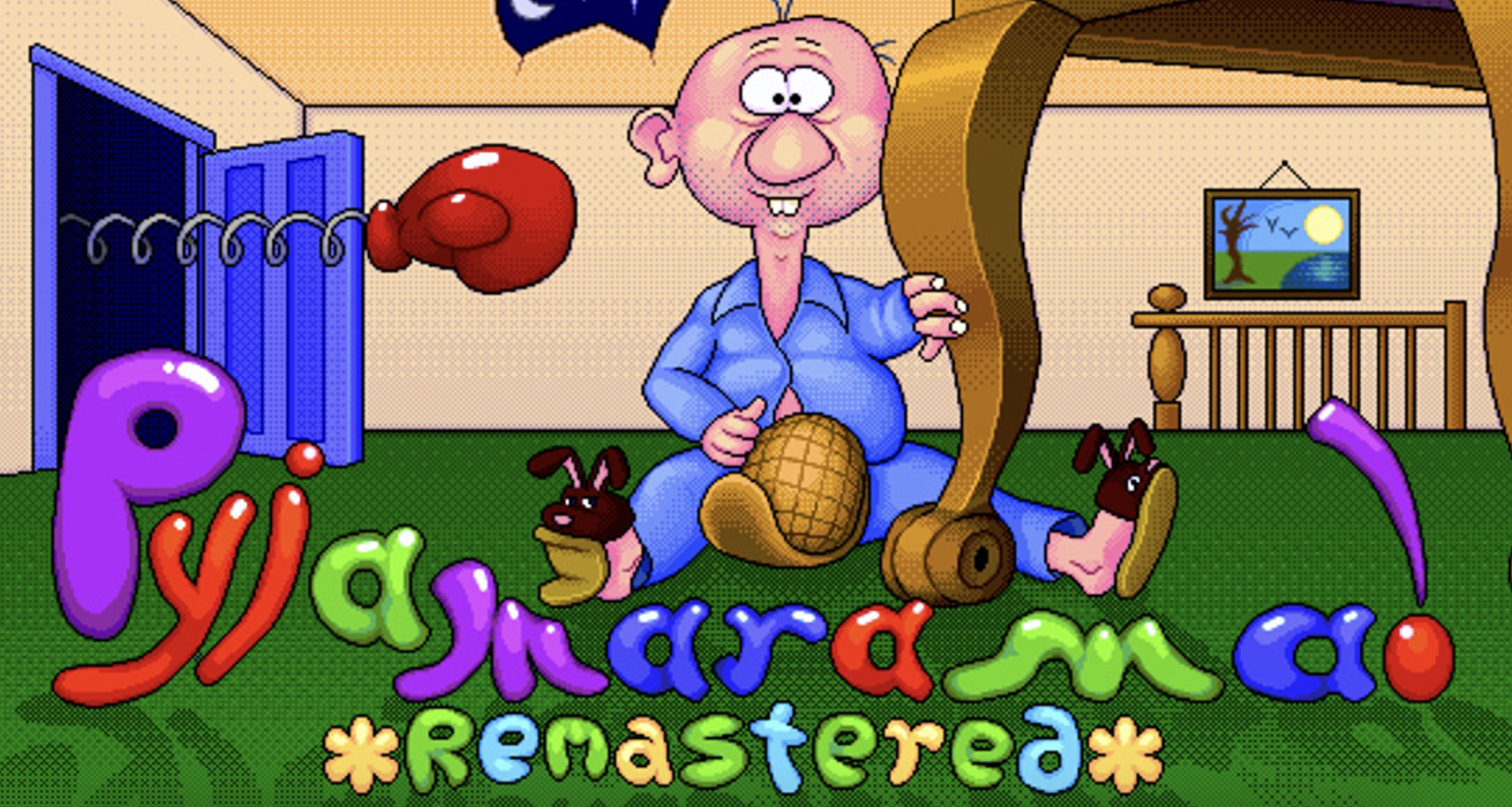
Pyjamarama Remastered’s Kickstarter campaign closed on 5th November 2026 with €12,744 pledged by 373 backers. MegaVision Software sought €8,000 for its ZX Spectrum Next remaster, with the campaign running from 6th October.
The funding supports production of a physical boxed edition. MegaVision’s game page lists November as its release window. The studio has not given a specific release day on the product page.
The Next version offers a 256-colour presentation and an alternative mode using the original Spectrum palette. It also adds refreshed music and sound. A Director’s Cut expands the adventure with new rooms, items and puzzles.
MegaVision lists a 1 MB memory requirement and names the Spectrum Next, N-Go and compatible machines as supported hardware.
Chris Hinsley wrote the original ZX Spectrum Pyjamarama, which Mikro-Gen published on cassette in 1984. It followed Wally Week’s appearance in Automania and forms part of the series alongside Everyone’s a Wally, Herbert’s Dummy Run and Three Weeks in Paradise.
The new version follows MegaVision’s Automania Remastered. The studio says it develops the Wally Week remasters in association with the property’s rights holders and plans to tackle the games in chronological order before creating a new adventure.
The completed Kickstarter campaign records the funding total. MegaVision’s Pyjamarama Remastered page sets out the Next edition’s features and hardware requirements.