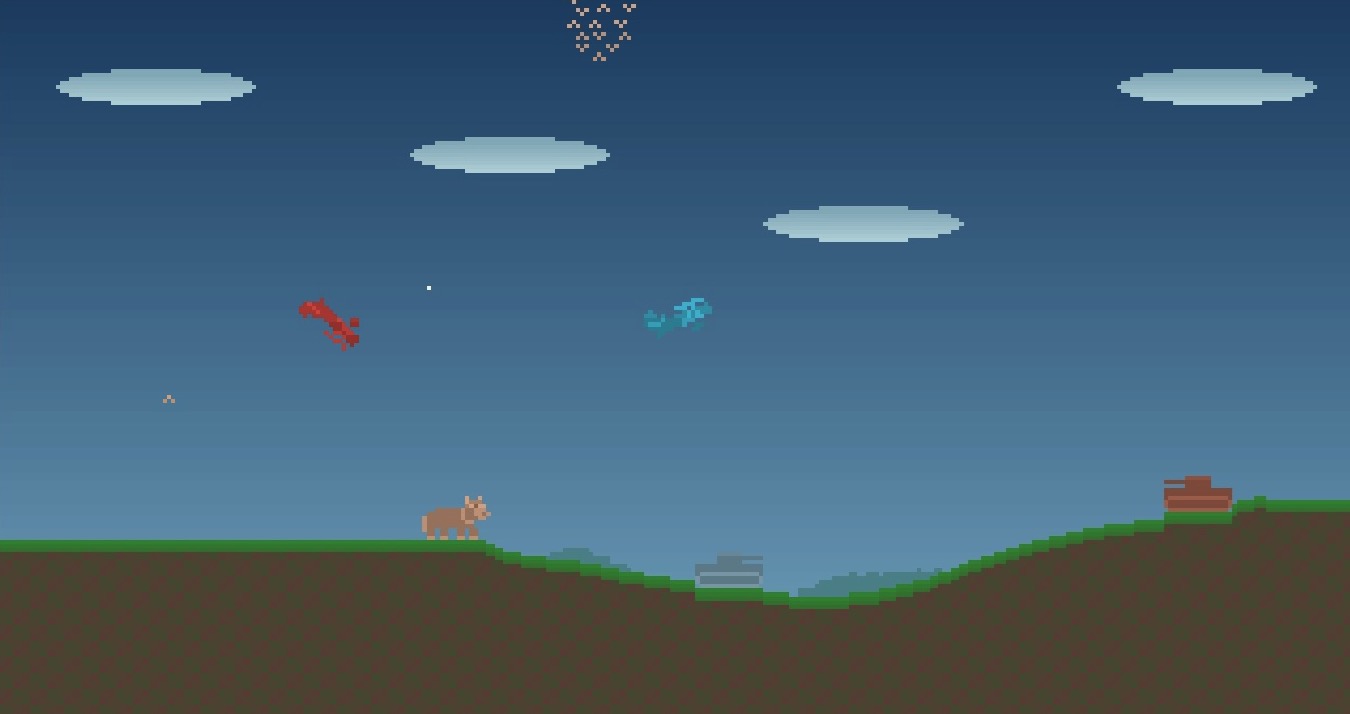
BlitterForge has released an Amiga conversion of Sopwith, the aerial combat game originally written by David L. Clark for DOS in 1984. The new edition is available as a free disk-image download, with the creator marking it Released.
The itch.io page appeared on 22nd October 2026. It presents the project as Sopwith AGA for the Amiga 1200, although its minimum requirements call for an accelerated machine rather than a standard A1200.
BlitterForge specifies a 68030 processor, Kickstart 3.1 and 8 MB of Fast RAM. The developer recommends a 68040 for better results and reports testing in WinUAE with Kickstart 3.1. No performance figures accompany those requirements.
The release consists of SopwithAGA.adf, listed at 880 kB. BlitterForge describes the conversion as free and open-source software distributed under the GNU General Public License. The download section currently lists the ADF disk image.
From a networking demonstration to a DOS favourite
Sopwith’s origins sit outside the usual commercial game launch. David developed it while working for BMB Compuscience in Canada, where it demonstrated the company’s Imaginet networking system. Its biplane battles gave connected computers something more immediate to exchange than business data.
The networking system did not become a commercial success, but the game circulated among IBM PC owners. Later revisions expanded the original design, while the eventual availability of source code opened a route for further adaptations.
The action takes place across a side-scrolling battlefield, with aircraft fighting above buildings and uneven terrain. Bombing runs, enemy planes and a limited fuel supply form part of its small-scale aerial battles. Its presentation places the aircraft and ground targets together in a side-on view.
BlitterForge’s release revisits this early PC design on another family of home computers. Its published hardware requirements are worth checking before downloading, particularly for A1200 owners without a processor or memory expansion.
The disk image and development information are available from BlitterForge’s Sopwith page.