Worms: The Director’s Cut has received a brand-new expansion for the Amiga almost three decades after the original game appeared, and it comes directly from Worms creator Andy Davidson and the community that has continued tinkering with his favourite version of the series.
The free 30th Anniversary Expansion Pack is available now and adds more than 40 levels, over 50 sample packs, 10 new DIY terrain sets and a collection of new teams. It arrives alongside a remix album and a browser-based tool for creating additional content, giving a 1997 Amiga game a substantial new lease of life.
Andy Davidson produced and coordinated the project with Ben “Squirminator2k” Paddon, drawing heavily on contributions from the wider Amiga community. The result feels less like somebody quietly uploading a few forgotten maps and more like a proper return to a version of Worms that never reached anything like the audience of its PC and console relatives.
The Amiga version Andy Davidson never wanted to leave behind
Worms: The Director’s Cut was released exclusively for the Amiga in 1997, after the original Worms had already spread across a long list of platforms. Andy has described it as starting life as an AGA upgrade before becoming somewhere he could experiment with ideas and weapons that might later influence the series.
That experimentation produced an unusually feature-packed version. The Director’s Cut added weapons including the Holy Hand Grenade and Super Sheep, alongside features such as back-flipping and considerably more scope for customisation, but it arrived at a point when the Amiga’s commercial market was rapidly shrinking.
Andy told Daryl Baxter that only around 5,000 copies were sold, which helps explain why plenty of people who knew Worms on PlayStation, PC or other systems never encountered it. He also described the Amiga release as his thank you to the machine and community that had helped make the original game possible.
The expansion builds directly on that relationship with the Amiga scene. Community-created material forms a substantial part of the package, including levels inspired by other corners of home-computer history rather than treating the machine merely as the hardware required to run it.
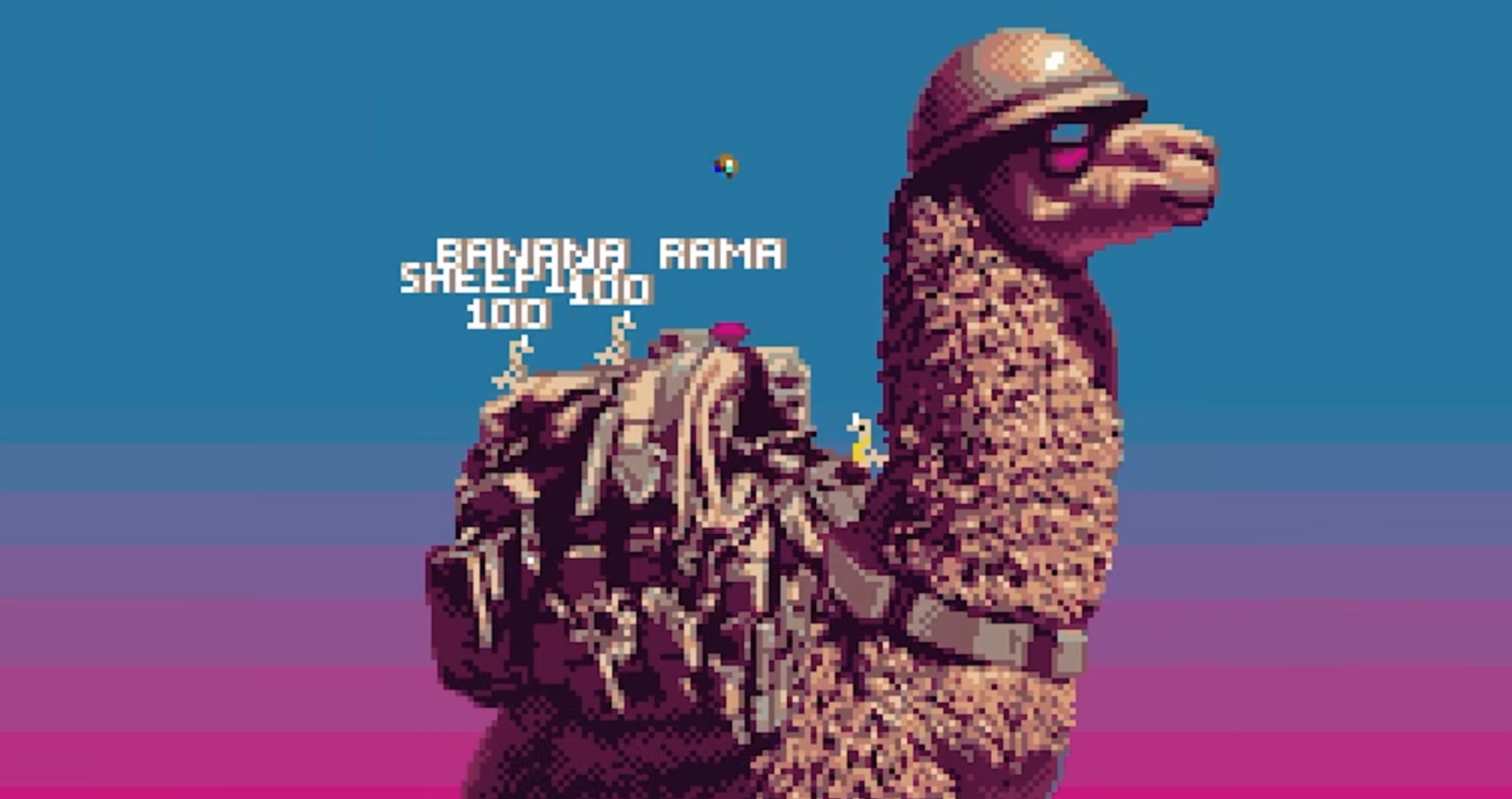
There is a Turrican tribute in there with Factor 5’s blessing, but the Llamasoft connection is the one that especially caught our eye. Andy has said Jeff Minter’s games inspired him from an early age and helped get him thinking about different gameplay mechanics, so meeting Jeff during the project became one of its highlights.
The resulting Llamasoft level was created by P-A Gustafsson, better known as Rodney from demo group TBL, with Jeff giving the idea his blessing. Andy has called it his favourite level in the entire expansion, which feels entirely appropriate given how much Llamasoft’s wonderfully strange corner of British game development has meant to generations of Amiga and home-computer players.
We are firmly in that camp. Llamasoft has spent decades proving that games can be technically clever, visually eccentric and unmistakably personal without sanding away all the oddness, so seeing that influence acknowledged inside a new expansion for Worms: The Director’s Cut feels like exactly the sort of crossover the Amiga scene should be celebrating.
The numbers alone make this a sizeable update. There are more than 40 levels to work through and over 50 additional sample packs, which is particularly appropriate for a series where replacing the worms’ voices with something increasingly ridiculous has long been part of the entertainment.
The 10 DIY terrains widen the construction side further, while the new online editor means players do not have to stop with the material included in the download. It can create dual-layer maps, mountain sets, DIY landscapes and teams from a web browser, effectively giving Worms: The Director’s Cut a modern companion tool without attempting to modernise the Amiga game itself.
There is a musical addition too. The project includes a separate remix album containing nine new pieces inspired by Bjørn Lynne’s original Worms theme, extending the anniversary beyond the game data alone.
Perhaps the nicest part of the whole thing is Andy’s attitude towards returning to the game. Rather than treating the expansion as a final goodbye, he has said he hopes it gives the Director’s Cut a new lease of life, with the accompanying website eventually becoming somewhere players can share custom levels, landscapes and sample sets.
That seems fitting for a game which was always unusually open to players making it their own. Nearly 30 years after its release, the Amiga version is not being packaged away as a finished historical curiosity. Its original creator is adding new material, the community is contributing levels and sounds, and fresh tools are making it easier to build even more.
There is also something pleasingly stubborn about an Amiga-exclusive game receiving a meaningful expansion in 2026. The machine had already been written off commercially when Worms: The Director’s Cut arrived in 1997, yet here it is receiving new content while plenty of games from supposedly healthier platforms of the same period have disappeared completely.
The 30th Anniversary Expansion Pack is free, and you can download it from the official Worms: The Director’s Cut expansion site, where the remix album and online creation tool are also available. Daryl Baxter’s interview with Andy Davidson also goes deeper into why he returned to the Amiga game and what he hopes happens next.