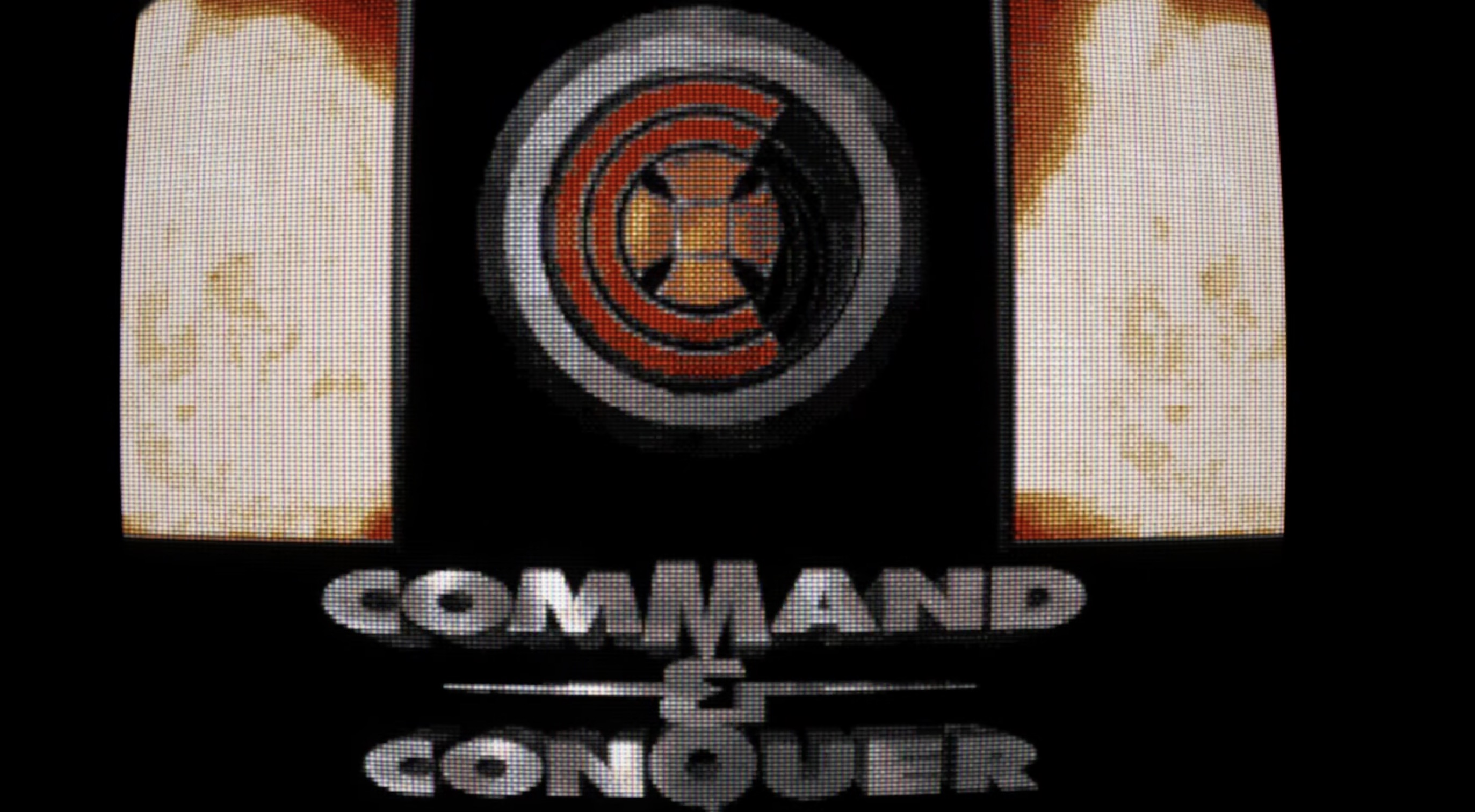
Command & Conquer on the Atari ST sounds like the sort of thing somebody would have laughed at in 1995. Westwood’s real-time strategy classic was built around a far more capable PC platform, yet Jonas Eschenburg is now getting it running on Atari hardware while aiming to keep the original gameplay intact.
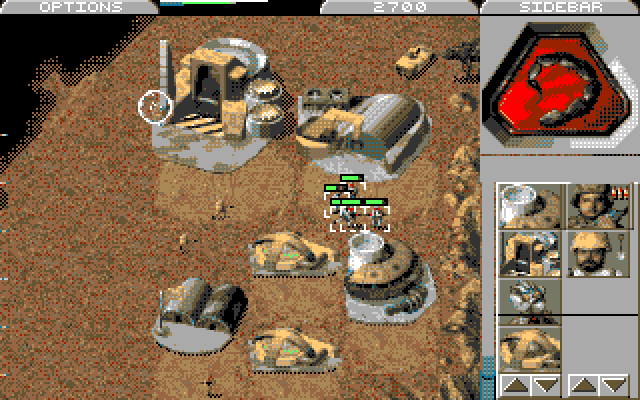
The project is still very much a work in progress, but it is already well beyond the “wouldn’t it be funny if…” stage. Jonas has the DOS version adapted to the ST’s 16-colour display, with both GDI and Nod campaigns, base building, Tiberium harvesting, combat and cutscenes all part of the port.
That alone would be enough to make this one of the more improbable Atari projects we have seen for a while. The original Command & Conquer was designed around 256-colour VGA graphics, so getting its battlefield, units and interface into the ST’s much tighter visual and memory limits is a serious piece of work.
Squeezing Westwood’s RTS onto Atari hardware
Jonas came to the project after completing his Atari ST port of DOOM. He had a fairly specific list for whatever came next: original source code had to be available, the game needed to come from the 320×200 VGA era before 3D accelerators became commonplace, and it needed some kind of technical challenge worth tackling.
There was one other requirement: it had to stand at least some chance of fitting into 4MB of RAM. Command & Conquer failed that test initially, but as a 2D game Jonas felt it was still something the ST ought to be capable of running. “Unlike DOOM, which was, in a way, a lost cause right from the beginning,” he says, “which, as you know, didn’t stop me anyway.”
The timing was personal too. After being caught in a round of redundancies at his previous workplace, Jonas had a compensation package that gave him some time to consider what came next and sharpen his skills. He wanted a project with plenty of creative freedom and initially expected the port to take about a month. “Well, see how that worked!”
The graphics were one of the first obvious problems. Jonas had already created palette-optimisation tools while working on DOOM, but Command & Conquer brought a new complication because it uses dozens, potentially hundreds, of different palettes across the game and its cutscenes.
His approach is to choose 16 colours that are a strict subset of the original 256-colour palette, which means effects such as fades can still transform those colours correctly. Bayer dithering then helps simulate the wider range of shades that the ST cannot display directly.
Much of that conversion originally happened while the game was running, but memory and performance pressures forced a rethink. Jonas now uses a web-based tool called Remix to prepare much of the artwork ahead of time, moving work away from the Atari itself wherever possible.
Memory has been another major battle, although Jonas now believes he has reached one of his key targets: running within the 4MB limit of standard ST hardware. The PC version could keep its assets sitting in RAM, whereas the Atari version has to reserve a smaller cache and reload material from storage when required.
The challenge is making those reloads intelligent enough that they do not constantly interrupt play. Modern flash-based storage helps enormously here, removing much of the pain that disk access would have caused on a period setup.
Getting the game to fit is not the same thing as getting it to run quickly. Jonas says his own target remains making Command & Conquer run well on a 16MHz Atari Mega STe, and he has not reached that point yet.
The CPU has plenty to deal with on both sides of the game. Graphics are expensive, and the Blitter did not turn out to be the magic solution Jonas initially hoped for because the overhead of setting it up can sometimes cancel out the gains. Then there is the game logic itself, with dozens of units running pathfinding while a strategic AI operates above them.
Jonas hopes there is more performance to be found there, but he is reluctant to achieve it by changing how the original game behaves. Preserving Command & Conquer rather than simplifying it into something easier for the Atari to run is part of the challenge.
One of the biggest breakthroughs came from the original drawing code itself. Westwood already tried to redraw only parts of the battlefield that had changed, but Jonas found that the algorithm was causing more objects to be refreshed than necessary.
Replacing that behaviour took a considerable amount of work, but the eventual reward was roughly a 50 per cent speed increase. “What I’m achieving by optimising is lowering the threshold,” Jonas explains. Falcon and TT systems can already provide a decent experience, while slower machines currently demand rather more patience and, in his words, “slightly rose-coloured glasses”.
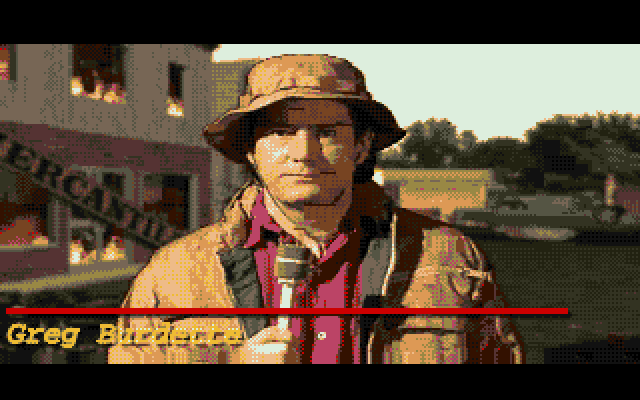
Curiously, the part Jonas has enjoyed most began as something he was not planning to include at all: the full-motion video. He originally expected to leave the cutscenes out, and even the people he asked suggested they would probably skip them anyway. The idea of getting FMV onto the ST refused to leave him alone.
“Developing the full-motion video system was the most fun I had programming for a long time,” Jonas tells SpriteFountain. He believes it may be the first ST game to use FMV, although he presents that as his own belief rather than a definitive historical claim.
The solution grew from something the ST happens to be good at: writing blocks eight pixels wide to the screen. Jonas divided each frame into tiles of that size, with a codebook supplying the pieces needed to assemble the image and a limited number of tiles replaced from frame to frame, an idea with similarities to Westwood’s own VQA video system.
After discussing implementation ideas with an AI assistant, Jonas wrote an encoder and ST player in only a couple of days. The result convinced him that keeping the original mission briefings and cutscenes was worth the detour. “In my opinion, having the original cutscenes and mission briefings is what sets this game apart from other ST titles.”
He has also been having some fun with the results outside the game, converting Westwood promotional videos into the same 16-colour Atari presentation. There is something pleasingly strange about seeing material so closely associated with mid-1990s PC gaming filtered through the visual character of an ST.
The latest 0.3.4 release has continued the optimisation work, adding digitised audio on plain ST hardware through the YM-2149 when DMA sound is unavailable. Link-time optimisation provides another speed increase, while cutscene encoding has also been refined.
The port uses the original game data, with Remix handling the conversion needed to prepare assets for Atari use. Once processed, the game can be placed on a real or emulated Atari hard drive and launched through CNC.TOS.
Jonas sees projects like this as a chance to explore how much performance can still be extracted from apparently inadequate hardware. In his professional career, he has often seen modern processors described as too slow while simultaneously watching them perform huge amounts of unnecessary work.
Commercial games were inevitably built under deadlines, he argues, which meant their developers had to make compromises and leave opportunities for later optimisation. That creates fertile ground for somebody willing to spend the time making one of those games run somewhere nobody originally intended.
There is a more personal reward too. Jonas enjoys seeing what careful programming can wring from old machines and still gets a kick from watching detailed graphics appear in 16 colours. He keeps coming back to the thought of how his 12-year-old self might have reacted if something like Command & Conquer had appeared for his childhood Atari in the early 1990s.
The project has also become a community effort in places. Jonas singles out Matthias for contributing code and says other developers have helped with optimisation, including a recent session where a group of experienced 16-bit programmers on Twitter helped squeeze the final CPU cycles from a piece of Motorola 68000 assembly.
He is equally keen to thank everyone who has tested the port, reported problems, written about it, made videos or donated towards the work. For something that began as a one-month experiment, Command & Conquer on Atari has clearly grown into something much larger.
It is difficult not to smile at the sight of Command & Conquer running on an ST. This was one of the defining PC strategy games of the mid-1990s, arriving years after Atari’s original 16-bit machine had established itself, and yet here it is being pushed into a form the hardware can handle without Jonas abandoning the behaviour he set out to preserve.
Command & Conquer for Atari ST remains in development, with Jonas continuing to work on speed, compatibility and the wider experience. You can follow the project and download the latest build from the official itch.io page.